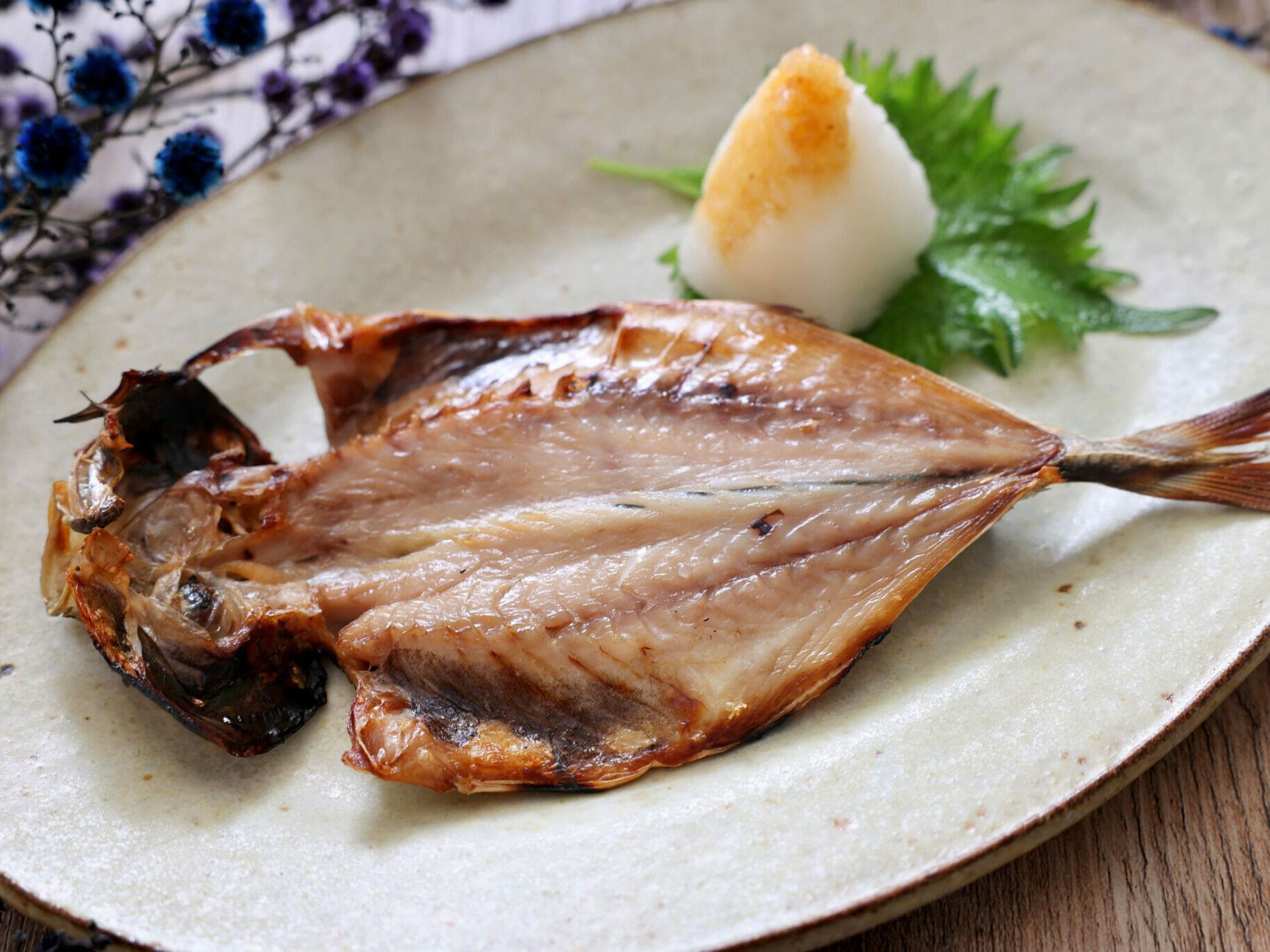
“Hiraki” is an abbreviation of sakana no hiraki (opened fish), referring to fish that has been split open along the belly or back and spread flat, or products that are dried in this form.
The word comes from the noun form of hiraku (to open or spread).
There are two main methods of splitting fish: sebiraki (back-cut) and harabiraki (belly-cut). The method used depends on the size of the fish, the type of processed product, and sometimes regional customs, such as in the preparation of eel kabayaki.
In sebiraki, the fish is cut along the back so that the belly remains intact. This method is commonly used for drying saury or pollock, and for salting mackerel. In the Kanto region, eel kabayaki is prepared using this method. Historically, because Kanto was influenced by samurai culture, cutting the belly (harabiraki) was avoided as it evoked seppuku (ritual disembowelment).
In harabiraki, the fish is split along the belly so that the back remains intact. The gills and internal organs are removed before cutting. This method is often used for smaller fish or fish with delicate skin that makes back-cutting difficult. In the Kansai region, eel kabayaki is typically prepared using this method. This is said to reflect the merchant culture of the region, where “opening one’s belly” (hara o watte hanasu, meaning to speak frankly) is viewed positively.